
Fellowship vs internship: the difference that matters
A fellowship is an award. It pays for something specific, such as a PhD, a research stay, a leadership programme or a dissertation year, and it usually comes from a foundation, a university or a government. An internship is a job. You join a team, do assigned work and are supervised day to day.
The difference between fellowship and internship shows up in three places. First, funding: fellowships tend to pay a stipend, tuition or a grant, while internships pay a wage or nothing. Second, duration: fellowships often run a full academic year or several years, internships run weeks or months. Third, purpose: a fellowship expects an output such as a thesis, a research paper or a project, while an internship expects work delivered inside the organisation.
Some programmes blur the line. The Fortis Fellowship 2020: Future Leaders Foundation Leadership Program covers all programme costs and includes funding and support for an internship abroad, so you get training and a placement in one award.
How to read this fellowship list
Each entry below is a real fellowship that accepts international applicants, with the host, the level, what it covers and the deadline our listing carries. Deadlines change every round, so treat the date as a guide and confirm it on the official page before you plan anything.
Start with the level. If you are finishing a bachelor's, skip the PhD and postdoctoral entries. Then check what the award actually pays: a tuition-only fellowship still leaves you to fund living costs, and a stipend-only fellowship leaves tuition. Finally, check the country and the visa route, because a fellowship that pays a monthly allowance in one country may not cover travel there.
Use the filtered list for this page to see what is open now, and the scholarship finder for the wider pool of funding.
Open scholarships that match
Schlumberger Foundation Faculty for the Future Fellowships for Women
Schlumberger Foundation
Amelia Earhart Fellowship for Women in Aerospace and Space Sciences (Zonta International)
Zonta International
 Australia
Endeavour Postgraduate Leadership Award (Australian Government) for Masters/PhD
Australian Gov’t
 Australia
Endeavour VET Leadership Award for International Students, Australian Government
Australian Government

 Hong Kong
 PhD Fellowship Scheme 2025/26 for International Students
Hong Kong RGC
 United States
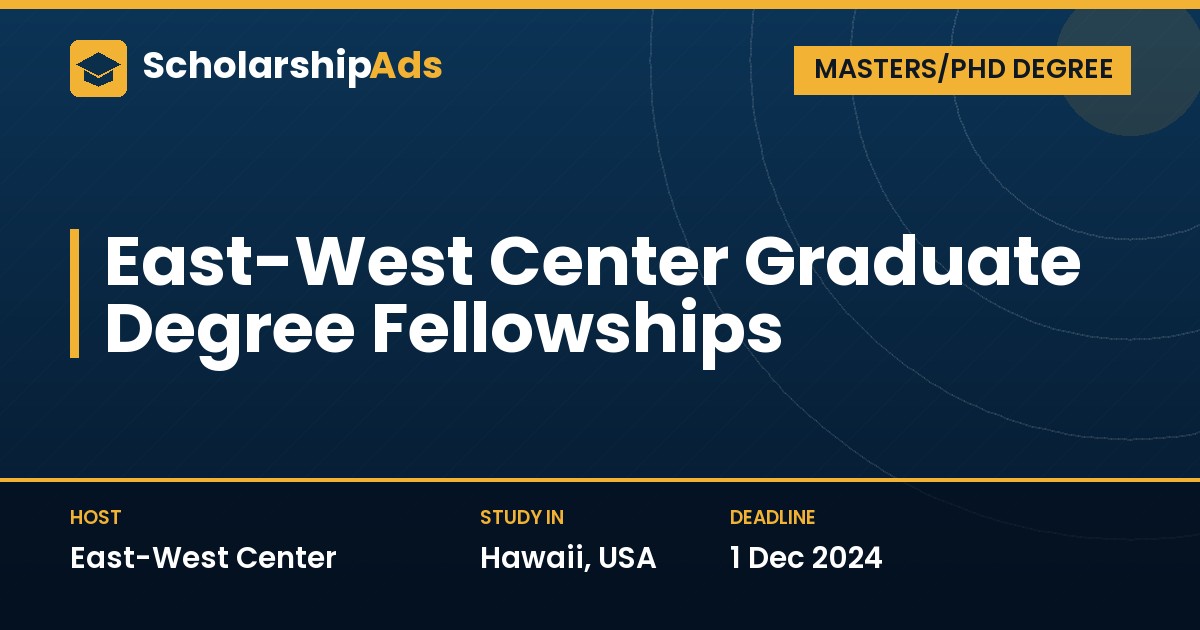
East-West Center Graduate Degree Fellowships for Asia, Pacific and US Students
East-West Center
 Switzerland
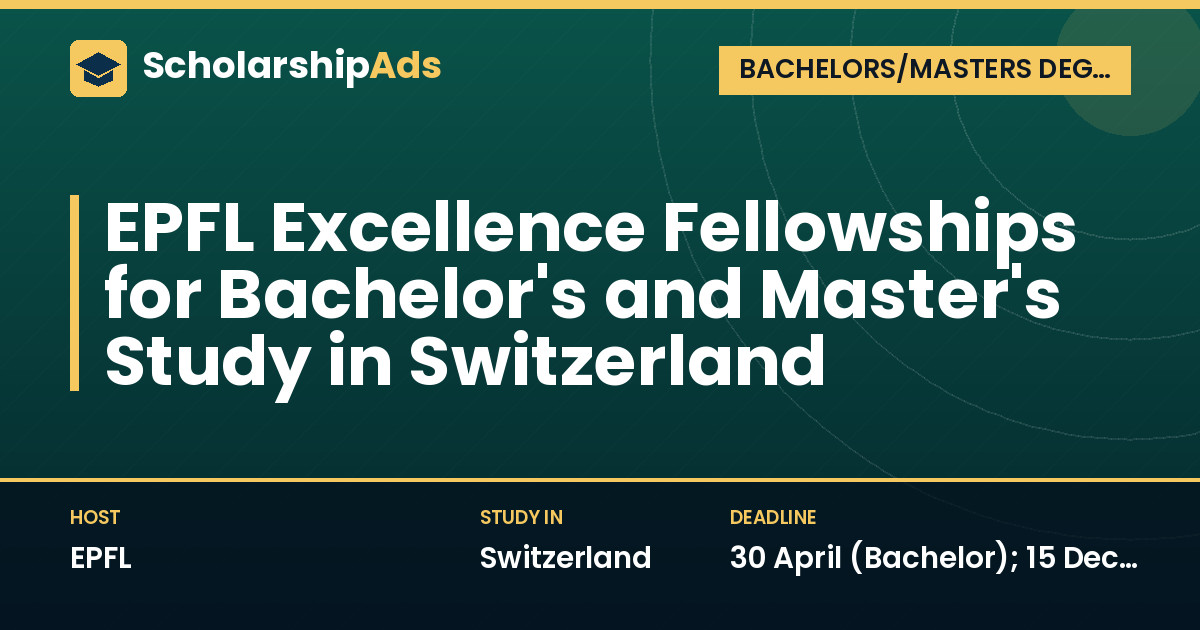
EPFL Excellence Fellowships for Bachelor's and Master's Study in Switzerland
EPFL
Open Society Fellowship from the Open Society Foundations
Open Society Foundations
IAF Grassroots Development Fellowship: PhD Research in Latin America and the Caribbean
Inter-American Foundation
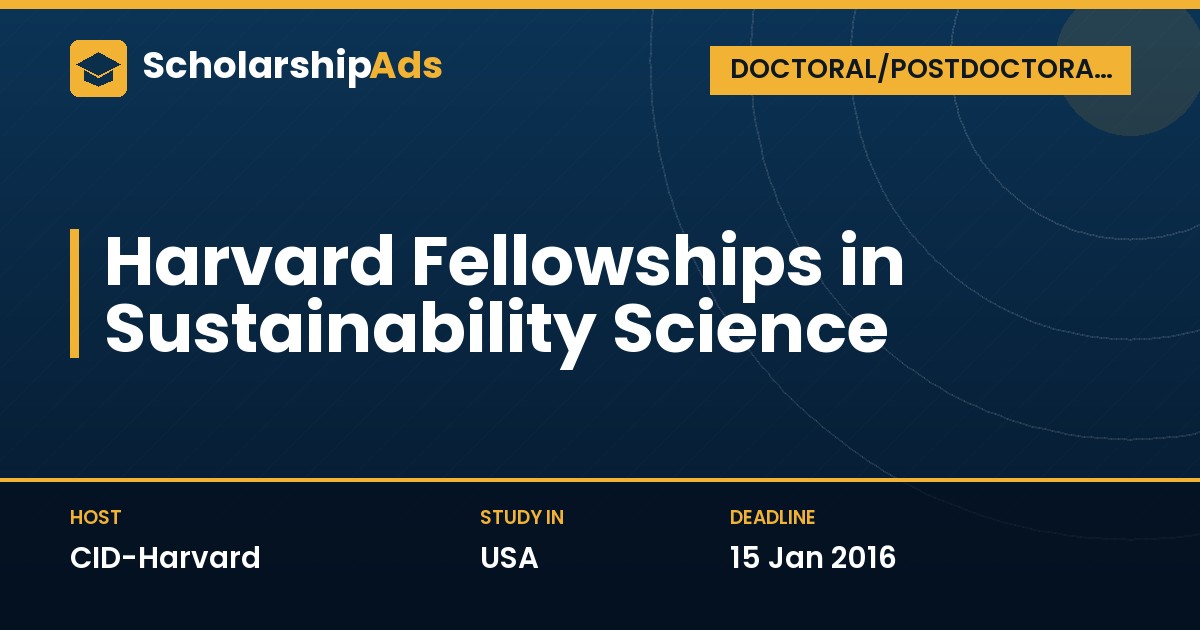 United States
Harvard Sustainability Science Fellowships at CID (Doctoral and Postdoctoral)
CID-Harvard
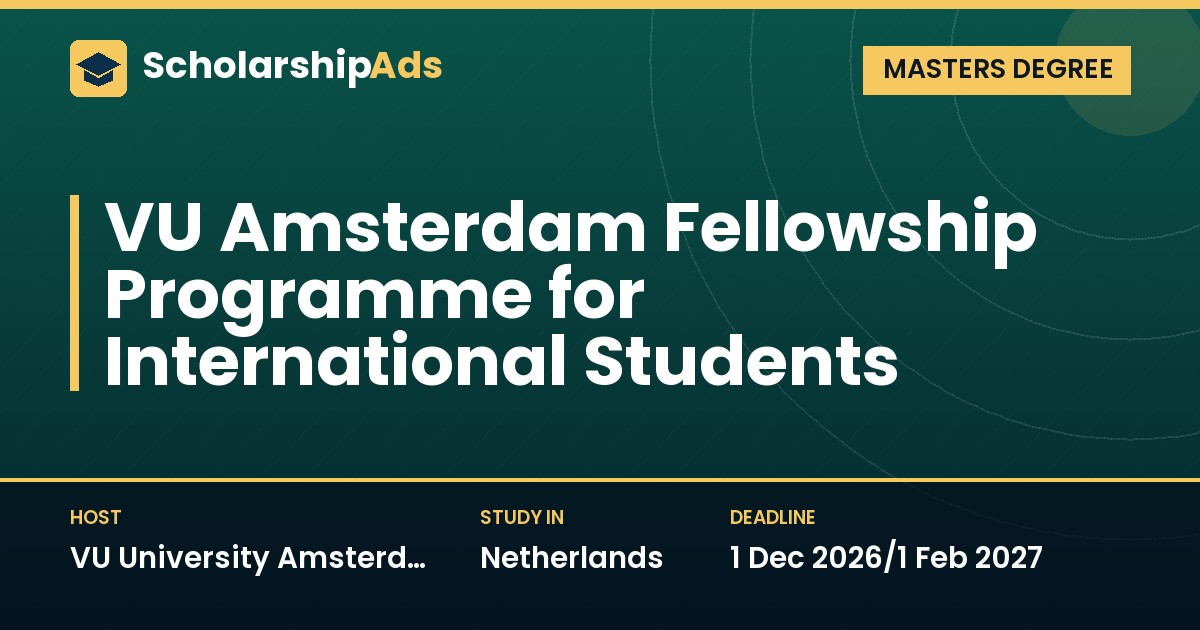
 The Netherlands
VU Amsterdam Fellowship Programme (VUFP) for International Master's Students
VU University Amsterdam

Harry Frank Guggenheim Foundation Dissertation Fellowships for PhD Students
Harry Frank Guggenheim Foundation
Fellowships that fund a full degree
These are the closest thing to a scholarship: they pay tuition, a stipend or both while you study.
- Rotary Peace Fellowships: Fully Funded Study with Rotary International covers tuition and fees, room and board, round-trip transportation and internship and field-study expenses, with study in the USA, Japan, the UK, Australia, Sweden and Uganda.
- GRIPS Scholarships for Masters and PhD Study in Japan pay a monthly stipend, accommodation, transport, insurance, fees and economy air tickets.
- Kofi Annan MBA Scholarships at ESMT Berlin for Developing Country Students give full tuition plus compensation for travel and accommodation.
- VU Amsterdam Fellowship Programme (VUFP) for International Master's Students covers tuition fees only, with no living allowance.
- East-West Center Graduate Degree Fellowships for Asia, Pacific and US Students cover tuition, books and dormitory housing in Hawaii.
- EPFL Excellence Fellowships for Bachelor's and Master's Study in Switzerland pay CHF 10,000 per semester and reserve a room in a student residence.
Research and PhD fellowships for international students
Doctoral funding is where fellowships do most of their work. The money is tied to a research project, and the award usually runs for a set number of years.
- Hong Kong PhD Fellowship Scheme 2025/26 for International Students pays an annual stipend plus a conference and travel allowance for up to three years.
- AAUW International Fellowships in USA for Women (Masters/PhD/Postdoc) pay fixed sums by level, disbursed in two equal payments.
- ISS PhD Fellowships in Development Studies, Netherlands pay a monthly amount plus a fieldwork allowance for up to four years.
- EDUFI Doctoral Fellowships in Finland (PhD Funding for International Researchers) run 3 to 12 months with a monthly allowance and a rolling deadline.
- Harry Frank Guggenheim Foundation Dissertation Fellowships for PhD Students help a candidate finish the thesis.
- Schlumberger Foundation Faculty for the Future Fellowships for Women fund PhD and postdoctoral study in science, technology, engineering and mathematics, renewable on performance.
- Russell E. Train Fellowships 2020: WWF Conservation Funding for Masters and PhD fund conservation study with a yearly maximum.
Leadership, policy and short professional fellowships
Not every fellowship leads to a degree. Some pay for training, a placement or a cohort programme, and these suit students who already know their field.
- Global Leaders Fellowship at George Washington University (GW) covers credit hours and can be renewed, but you must fund books and living costs yourself.
- Endeavour Executive Fellowships by the Australian Government provide a fixed package with travel, establishment and monthly stipends.
- Endeavour Postgraduate Leadership Award (Australian Government) for Masters/PhD pays a monthly stipend, capped per calendar year, plus travel and establishment allowances.
- Endeavour VET Leadership Award for International Students, Australian Government uses the same stipend structure for vocational study.
- UNESCO/ISEDC Co-Sponsored Fellowships Programme waives tuition and pays a monthly stipend.
- Sidney Topol Fellowship in Nonviolence Practice at Brandeis University covers full tuition but not airfare, fees, insurance or housing.
- Fitzduff Family Social Policy and Coexistence Fellowship, Brandeis University and UNU-INWEH Scholarships in Integrated Drylands Management for Developing Country Students sit in the same space of policy and development training.
What fellowships pay: a comparison table
Every figure below comes from our listings. Check the official page for the current round.
| Fellowship | Level | What it covers | Deadline |
|---|---|---|---|
| Faculty for the Future | PhD/Postdoc | Up to USD 50,000 per year for PhD, USD 40,000 for postdoc | 7 November 2026 |
| Amelia Earhart Fellowship | PhD | US$10,000 | Annual, mid-November |
| Hong Kong PhD Fellowship Scheme | PhD | Annual stipend plus travel allowance, up to three years | Annual, early December |
| University of Geneva Excellence Masters Fellowships | Masters | CHF 10,000 to 15,000 per year | 28 February 2026 |
| University of Manitoba Graduate Fellowships | Masters/PhD | Master's $20,000 per year, doctoral $25,000 per year | Varies per faculty |
| AAUW International Fellowships | Masters/PhD/Postdoc | $20,000 master's, $25,000 doctorate | 17 September 2026 |
| Rotary Peace Fellowships | Masters/Certificate | Tuition, room and board, transport, field study | Annual, mid-May |
Who qualifies for a student fellowship
Eligibility rules vary, but the same checks come up again and again.
- Citizenship and residence. Many fellowships target applicants from specific regions or developing countries. Read the country list before anything else.
- Level and stage. Some awards are for applicants who have not yet started a programme, others for candidates already close to finishing a thesis.
- Field of study. Conservation, aerospace, development studies and public policy all have dedicated funds. Browse by subject, for example environmental management fellowships or peace fellowships.
- Gender or group. Some funds are reserved for women or for under-represented groups.
- Host institution. A university fellowship usually requires you to be admitted there first.
- Return or re-integration plans. Several funders ask how you will use the training at home.
How to apply for a fellowship, step by step
- Shortlist three to five fellowships that match your level, field and nationality.
- Read the official call for the current round and note the exact deadline and time zone.
- Check whether you need admission to a host university before you apply for the funding.
- Contact a supervisor or referee early and give them your draft and your CV.
- Write the research or project proposal first, then the motivation letter around it.
- Collect transcripts, degree certificates, language scores and passport details.
- Request references at least two weeks before the deadline.
- Submit before the final day and keep the confirmation email.
Documents a fellowship application usually needs
- Academic transcripts and degree certificates
- CV or resume, two pages at most
- Research proposal or statement of purpose
- Motivation letter tied to the fellowship's goals
- Two or three reference letters
- Language test scores where the host requires them
- Passport copy and, for some funds, proof of admission
- Budget or cost estimate for grants paid against actual expenses
How fellowships are selected, and who they suit
Selection panels look for fit between your project and the funder's mission, evidence that you can finish the work, and referees who can speak to your record. Academic scores matter, but a clear proposal and a credible plan often decide close calls.
Who a fellowship suits
- Students who want funding tied to a defined project rather than general study.
- Researchers who need a stipend for a fixed period, such as a dissertation year.
- Early-career professionals who want training plus a network.
Who should look elsewhere
- Applicants who need cash for living costs only, with no project to propose.
- Students who have not yet chosen a field, since most fellowships are field-specific.
- Anyone who cannot commit to the full duration the award requires.
If a fellowship is not the right shape, a standard scholarship may fit better. See the guides to scholarships in the United States, scholarships in the United Kingdom or scholarships in Germany.
Common mistakes in fellowship applications
- Applying to one fund only. Deadlines cluster, so build a calendar of several.
- Ignoring the funder's mission. A conservation fund will not pay for an unrelated thesis.
- Recycling a scholarship essay. A fellowship proposal needs a project, a method and a timeline.
- Missing the admission step. Some awards require an offer from the host before the funding deadline.
- Asking referees late. Reference letters take time and referees are busy.
- Assuming the award covers everything. Tuition-only fellowships leave living costs to you.
Fellowships and internships: which to choose first
If you need income and work experience quickly, an internship is the faster route. If you need funding for study, research or a structured leadership programme, a fellowship does more for your record. Many students do both: an internship during the degree, a fellowship to fund it.
For country-specific options, browse scholarships in Switzerland, scholarships in the Netherlands, scholarships in Australia, scholarships in Canada, scholarships in Japan or scholarships by country. Our scholarship tips cover essays and references, and all guides lists the rest.