
What "fully funded" actually means
A fully funded scholarship covers the full cost of your tuition. Some go further and add a monthly stipend, accommodation, insurance or flights. Others, despite the label, cover tuition only and leave you to pay rent and food.
The Adlerbert Study Scholarships at Chalmers University of Technology are a clear example of the first kind: they cover 100% of tuition fees for a two-year Master's programme in Sweden, but the award is a tuition waiver only, so you budget separately for living costs.
Read every listing for the words that tell you which kind you have found. "Full tuition fee waiver" means tuition. "Full scholarship covering tuition, travel and a monthly allowance" means the whole package. The difference decides whether you can afford to accept the offer.
How to read our fully funded scholarships list
Our filtered list of fully funded scholarships shows current openings. Each entry names the host, the level, what the award covers and the deadline. Start with the level, because an undergraduate award is no use if you are applying for a Master's.
Then read the coverage line. A full fee waiver and a full scholarship with stipend are both listed as fully funded, so the coverage text is where the real value sits. Finally, check the deadline against your own timeline: if you need a visa, an offer three months before term is tight.
For a wider view, browse the scholarship finder or go straight to scholarships by country.
Open scholarships that match
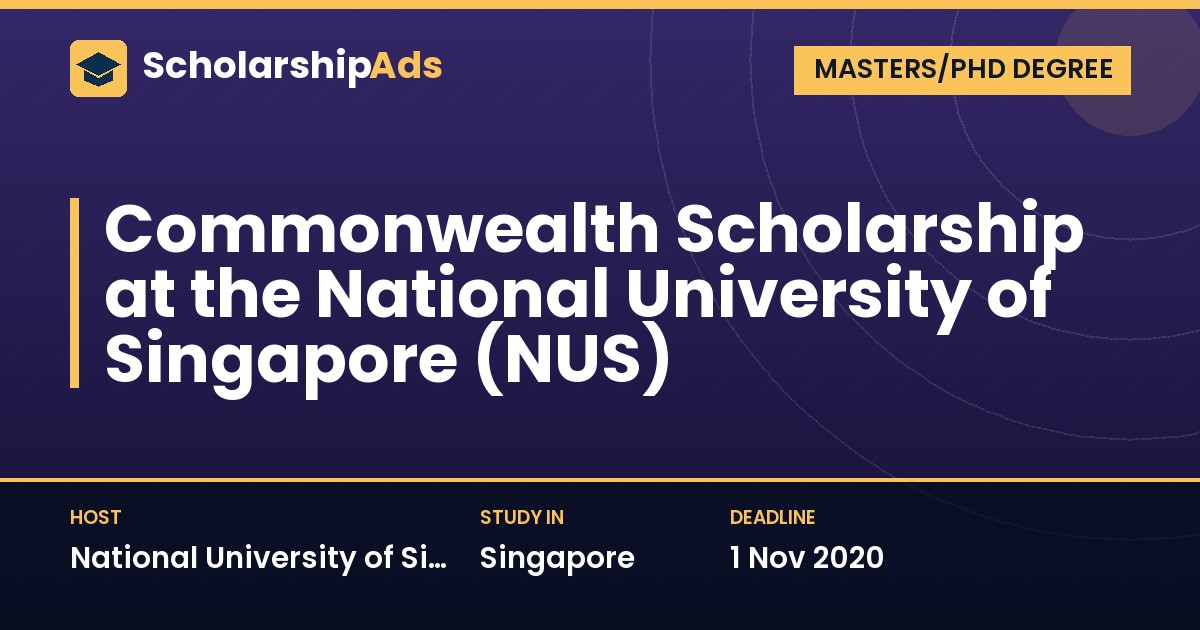 Fully funded
 Singapore
Commonwealth Scholarship at the National University of Singapore (NUS)
National University of Singapore
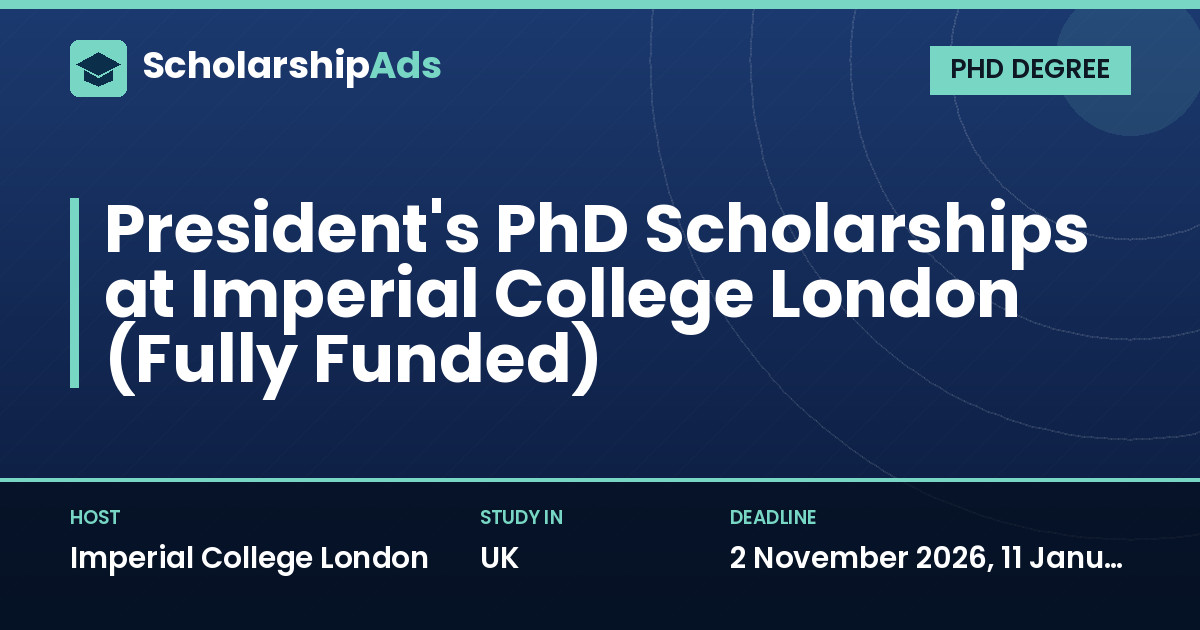 Fully funded
 United Kingdom
President's PhD Scholarships at Imperial College London (Fully Funded)
Imperial College London
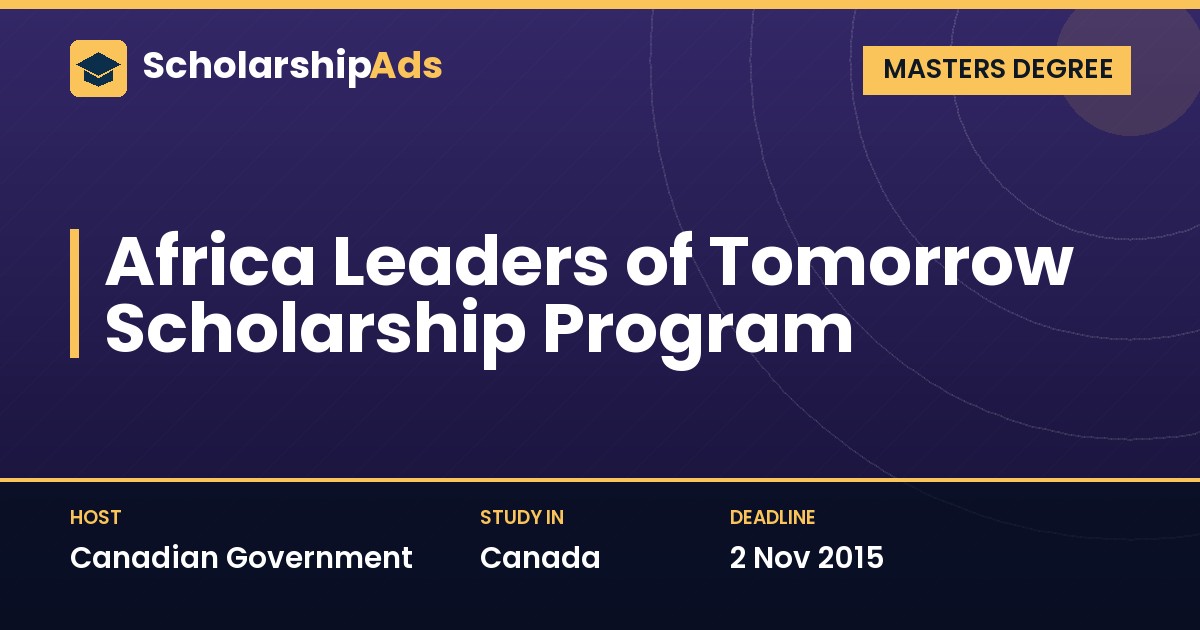 Fully funded
African Leaders of Tomorrow Scholarship Program: Canadian Government Masters Funding
Canadian Government
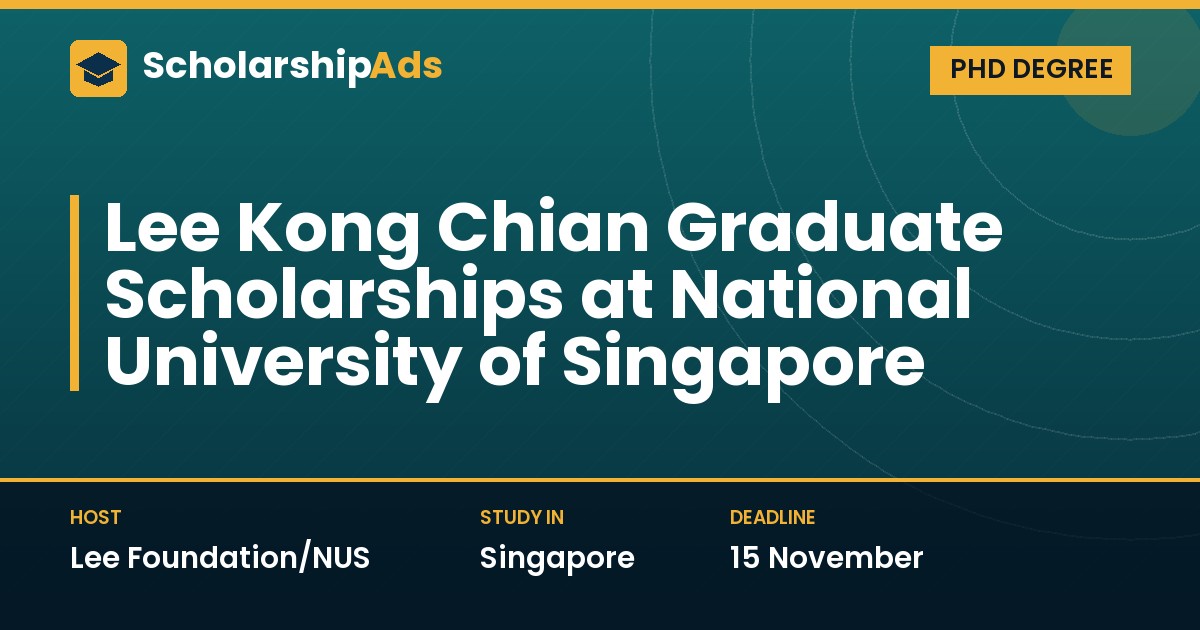 Fully funded
Singapore
Lee Kong Chian Graduate Scholarships at National University of Singapore
Lee Foundation/NUS
 Fully funded
 Canada
Pierre Elliott Trudeau Foundation Doctoral Scholarships for PhD Research in Canada
Pierre Elliott Trudeau Foundation
 Fully funded
 The Netherlands
Justus & Louise van Effen Excellence Scholarships at TU Delft for International Master's Students
Delft University of Technology
 Fully funded
The Netherlands
Leiden University Excellence Scholarships (LExS) for Master's Study in the Netherlands
Leiden University
 Fully funded
United Kingdom
Gates Cambridge Scholarships for International Students at University of Cambridge
Gates Cambridge Trust
 Fully funded
 Japan
Japan-IMF Scholarships for Asian Students: Master's in Japan
Japan-IMF
 Fully funded
Sub-Saharan Africa Excellence Scholarships at TU Delft, Netherlands
Delft University of Technology
 Fully funded
 Switzerland
Swiss Government Excellence Scholarships for International PhD and Postdoc Researchers
Swiss Government
 Fully funded
 Denmark
Erasmus Mundus Joint Master in Media Arts Cultures Scholarships, Danube University
Danube University
Fully funded scholarships that cover tuition and living costs
These awards pay tuition and add money for rent, food or travel. They are the closest to a true full ride.
- SIDS Scholarships in Water and Sustainable Development at IHE Delft offer a full scholarship covering tuition, insurance, international travel and a monthly living allowance for nationals of small island developing states.
- ADB-Japan Scholarship Program for Developing Countries in Asia and Pacific covers full tuition, a monthly subsistence and housing allowance, books, medical insurance and travel.
- Mandela Rhodes Foundation Scholarships for Africans cover tuition, registration, study materials, accommodation, meals, a personal allowance and travel for a one-year Honours or two-year Master's in South Africa.
- Karsh International Scholarships at Duke University cover tuition, room and board, mandatory fees, demonstrated need and three summers of funding.
- The George J. Mitchell Scholarships for US citizens to study in Ireland cover tuition, accommodation, a living stipend and travel from September through May.
Full tuition waivers: the award pays fees, you pay the rest
These are fully funded in the tuition sense. Budget for living costs from your own funds or a second award.
- ASBS Global Impact Scholarship at Glasgow University is a full fee waiver for international Master's students.
- The Karolinska Institutet Global Master's Scholarships cover the tuition fee only, so you pay living expenses, accommodation and travel yourself.
- Sustainability Masters Scholarships at University of Leeds cover full tuition fees at the School of Earth and Environment.
- MRes in Climate and Atmospheric Science Scholarships at University of Leeds fund the full-time MRes, with places for international and UK/EU students.
Partial awards and fee reductions worth checking
Not every award on a fully funded list pays everything. Some cut your tuition by a set amount, which still changes the total you need.
| Programme | Level | What it covers | Deadline |
|---|---|---|---|
| Leiden University Excellence Scholarships (LexS) | Master's | Part of the tuition fee, from €10,000 to €19,000 | 1 December 2026 |
| Mälardalen University Scholarship Programme | Master's | Part of the tuition fee | 1 February 2027 |
| University of Skövde Master's Scholarships | Master's | 50% tuition fee waiver | 15 February 2027 |
| ANU Chancellor's International Scholarships | Bachelor's and Master's | 25% or 50% tuition fee reduction | Application closed |
| International Excellence Scholarships at University of Leeds | Master's | £3,000, £6,000 or £16,000 off tuition | 29 May |
Treat these as money off the bill, not as funding for your life abroad. They still belong on your shortlist if the remaining cost is manageable.
Undergraduate full scholarships and need-based awards
Full funding at bachelor's level usually comes from the university itself, and many awards are decided at the same time as admission.
- International Scholars Program at University of British Columbia offers four need-and-merit awards that match your assessed financial need, with a deadline of 15 November.
- UBC International Scholars Program is the same programme, renewable for up to three more years of undergraduate study.
- UBC International Merit Scholarships include the International Major Entrance Scholarship and the Outstanding International Student Award, considered automatically when you apply by the admissions deadline.
For US universities, the Karsh award at Duke is the clearest example of a full ride for international students on the list. If you are searching whether a particular US or UK university gives full scholarships to international students, check that university's own financial aid page, because the answer changes by institution.
Government, research and mobility funding
Governments and foundations fund study abroad through schemes that are fully funded but tied to a country, a field or a nationality.
- The Canadian International Development Scholarships 2030 fund study and training in Canada for students from partner countries, applied for through Canadian project partners.
- Fulbright US Student Program for Study Abroad brings international graduate students, professionals and artists to the United States with health benefits, support and a stipend based on the host country.
- Boren Awards for USA students to Study Abroad fund US students for language study in regions critical to US interests, with awards scaled to the length of stay.
- Belgian American Educational Foundation Fellowships give US citizens a 12-month grant with a stipend and health insurance for study or research in Belgium.
- DAAD Scholarships for Postgraduate Studies in Architecture fund Master's and complementary courses in Germany with a monthly stipend, travel and insurance.
Fellowships, internships and leadership programmes
Some fully funded opportunities are not degrees. They pay you to work, research or train for a set period.
- ADB Internship Program runs for eight to twelve weeks in Manila with a stipend and part of the airfare covered.
- EPFLglobaLeaders Fellowship Programme contributes to a doctoral salary for forty-eight months at EPFL in Switzerland.
- Ibrahim Leadership Fellowships place young African professionals for twelve months at AfDB, ECA or ITC with an annual stipend.
- Politecnico Milano Merit Based International Scholarships combine tuition exemption with a grant or accommodation for international Master's students in Italy.
Who fully funded scholarships suit, and who should look elsewhere
These awards suit students with strong grades, a clear reason for the specific programme and the time to prepare documents months ahead. They also suit applicants who can move country for a fixed start date.
Look elsewhere if you need funding confirmed within a few weeks, if you cannot cover living costs while a tuition-only waiver is processed, or if your grades are below the level the award expects. In those cases a partial scholarship plus a cheaper country is often the faster route.
Students who need a specific field should browse any field of study scholarships or a narrower list such as engineering, health or environment.
How to apply, step by step
- Pick your level and field, then shortlist three to five awards from the fully funded list.
- Read the official page for each award and confirm what it covers and who is eligible.
- Check the deadline and work backwards: allow time for tests, references and translations.
- Prepare your documents, including transcripts, degree certificates, passport, motivation letter and references.
- Write a motivation letter that names the programme and explains why you need that specific funding.
- Submit before the deadline and keep the confirmation email.
- Apply for a second and third award so one rejection does not end your year.
Use our scholarship tips for help with letters and references, and all guides for country and level breakdowns.
Documents, selection and common mistakes
Documents to have ready
- Academic transcripts and degree certificates
- Passport or national ID
- Motivation letter or statement of purpose
- Two academic references
- English test result where the programme asks for one
How selection usually works
Most committees weigh academic record first, then fit between your goals and the programme, then the strength of your references. Financial need decides the award size in need-based schemes such as the UBC International Scholars Program.
Common mistakes
- Assuming "fully funded" covers living costs when the award is a tuition waiver only.
- Missing a deadline because the scholarship deadline is later than the admission deadline.
- Sending the same motivation letter to every programme.
- Ignoring nationality rules: many awards are limited to specific countries or regions.
- Applying to one award only.
Where to study and what to search next
Fully funded awards cluster in a handful of countries. Sweden, the Netherlands, the UK, Canada, the United States, Germany, Switzerland, Belgium, Italy and Australia all appear in our examples.
Start with the country pages for the places you can realistically move to: Sweden, the Netherlands, the United Kingdom, Canada, the United States, Germany, Switzerland, Belgium, Italy and Australia.
If you are also considering short programmes, the same lists cover France, Japan, New Zealand and Singapore.