
How to read this nursing scholarship list
Every entry in the list is a real award with a named host, a level, a funding type and a deadline. Read the deadline column first, then the funding column, then the level. A scholarship that covers tuition only is still valuable, but it does not pay your rent, and you need to know that before you build a budget around it.
The list is filtered to the health field, so it includes nursing, medicine, public health and related study. Not every entry is a nursing award in the narrow sense. Some are university-wide awards that a nursing student can hold, and some are medical or health-related postgraduate scholarships. Check the eligibility wording on the official page before you spend time on an application.
Use the filter link to see current openings: health scholarships with deadlines ahead. If you want to widen the search, the general scholarship finder covers every field.
Grouped by what they actually pay for
The awards fall into three practical groups. Knowing which group you are in decides how much extra funding you need to find.
Full tuition plus living costs
- Australia Awards Scholarships for Developing Country Students cover full tuition, return air travel, a contribution to living expenses, health cover and introductory academic programme fees, for Bachelors, Masters and PhD study.
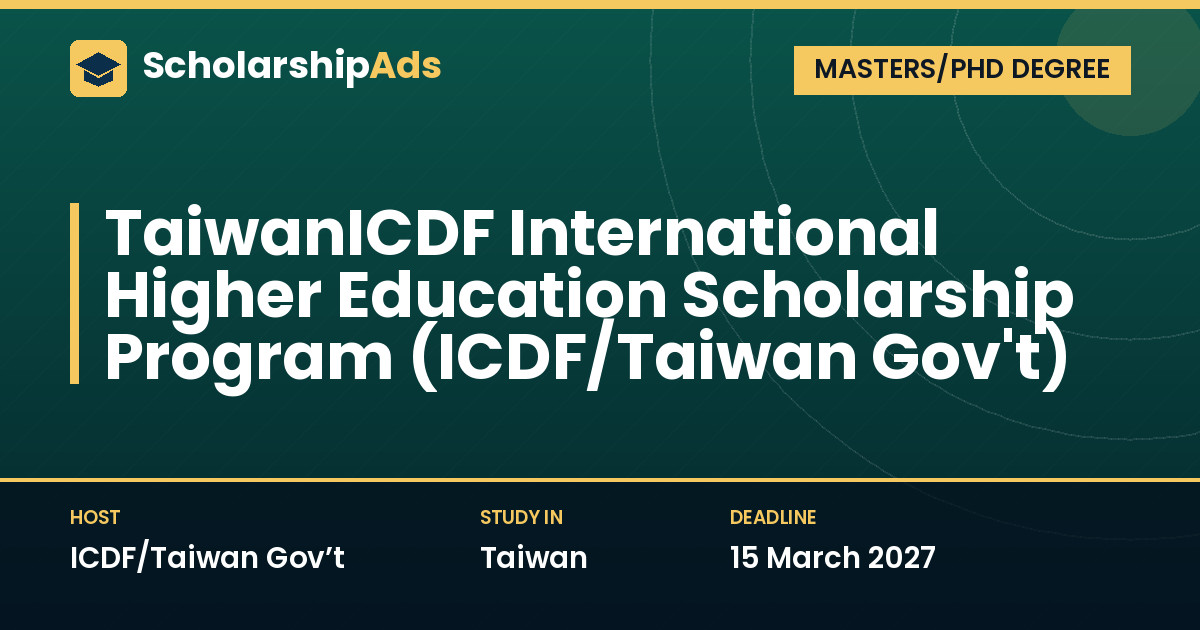
- TaiwanICDF International Higher Education Scholarship Program provides return airfare, housing, tuition and credit fees, insurance, textbooks and a monthly allowance.
- VLIR-UOS ICP Connect Scholarships pay tuition, travel, insurance and living expenses for the whole Masters programme.
- Commonwealth Master's and PhD Scholarships include airfare, tuition and examination fees, a monthly stipend and a study travel grant.
Tuition only
- Karolinska Institutet Global Master’s Scholarships cover the tuition fee only. Living costs, accommodation and travel are yours.
- Uppsala University Global Scholarships cover full tuition for an international Master's programme, not living expenses.
- VU Amsterdam Fellowship Programme (VUFP) covers tuition fees with no extra allowance for study or living costs.
- Umeå University Scholarships give a full or partial tuition waiver.
- Glenmore Medical Postgraduate Scholarship at University of Edinburgh covers full tuition for the duration of the programme.
Partial, stipend or fee contribution
- University of Twente Scholarships (UTS) range from €3,000 to €22,000 for one year.
- Developing Solutions Scholarships at University of Nottingham cover 50 to 100 percent of tuition fees.
- UCL Global Masters Scholarships are worth £15,000 for one year.
- DAAD Development-Related Postgraduate Scholarships in Germany pay a monthly stipend plus insurance and a travel allowance.
- Wells Mountain Foundation Empowerment Through Education Scholarships range from $300 to $3,000 a year for undergraduates.
Open scholarships that match
 Hong Kong
 PhD Fellowship Scheme 2025/26 for International Students
Hong Kong RGC
IAF Grassroots Development Fellowship: PhD Research in Latin America and the Caribbean
Inter-American Foundation
 Fully funded
 Sweden
Uppsala University Global Scholarships for Master's Study in Sweden
Uppsala University
 The Netherlands
VU Amsterdam Fellowship Programme (VUFP) for International Master's Students
VU University Amsterdam
 Fully funded
The Netherlands
Amsterdam Excellence Scholarships (AES) at University of Amsterdam
University of Amsterdam
 Fully funded
Sweden
Karolinska Institutet Global Master’s Scholarships for Non-EU/EEA Students
Karolinska Institutet
 Fully funded
 Belgium
VLIR-UOS ICP Connect Scholarships in Belgium for Master's Study
VLIR-UOS
 Fully funded
 Australia
 Awards Masters Scholarships for Africa: Australian Government Funding
Australian Government
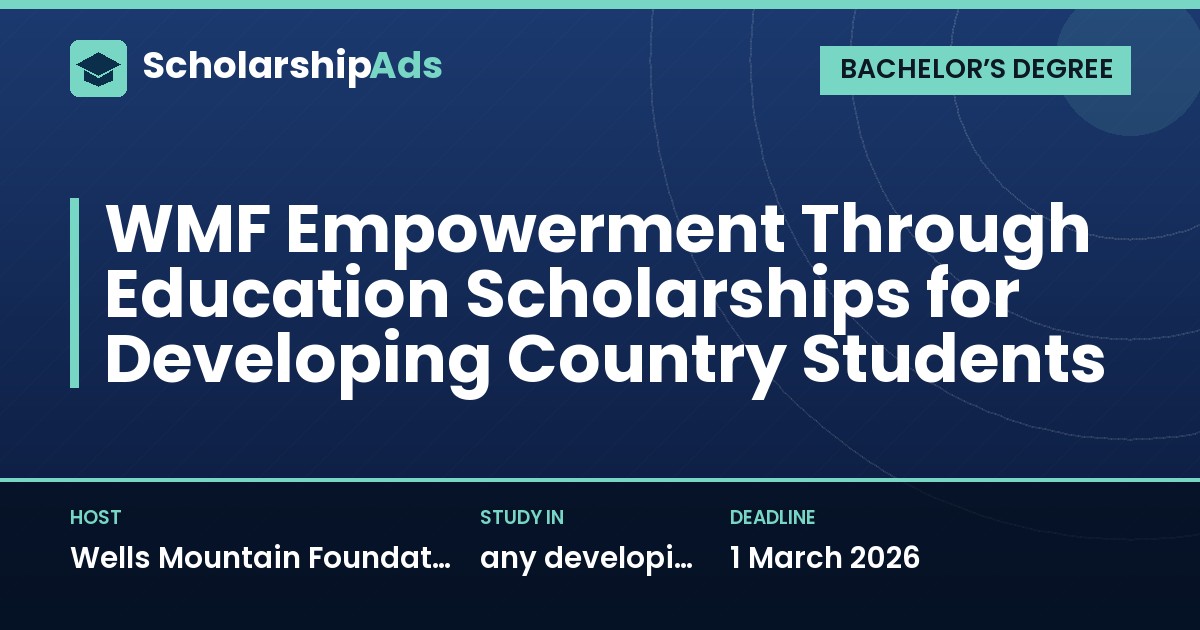
Wells Mountain Foundation Empowerment Through Education Scholarships for Developing Country Students
Wells Mountain Foundation
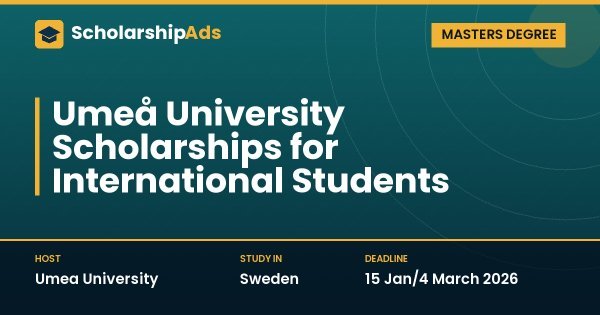
Umeå University Scholarships for International Students
Umea University
 Fully funded
TaiwanICDF International Higher Education Scholarship Program (ICDF/Taiwan Gov't)
ICDF/Taiwan Gov’t
 United Kingdom
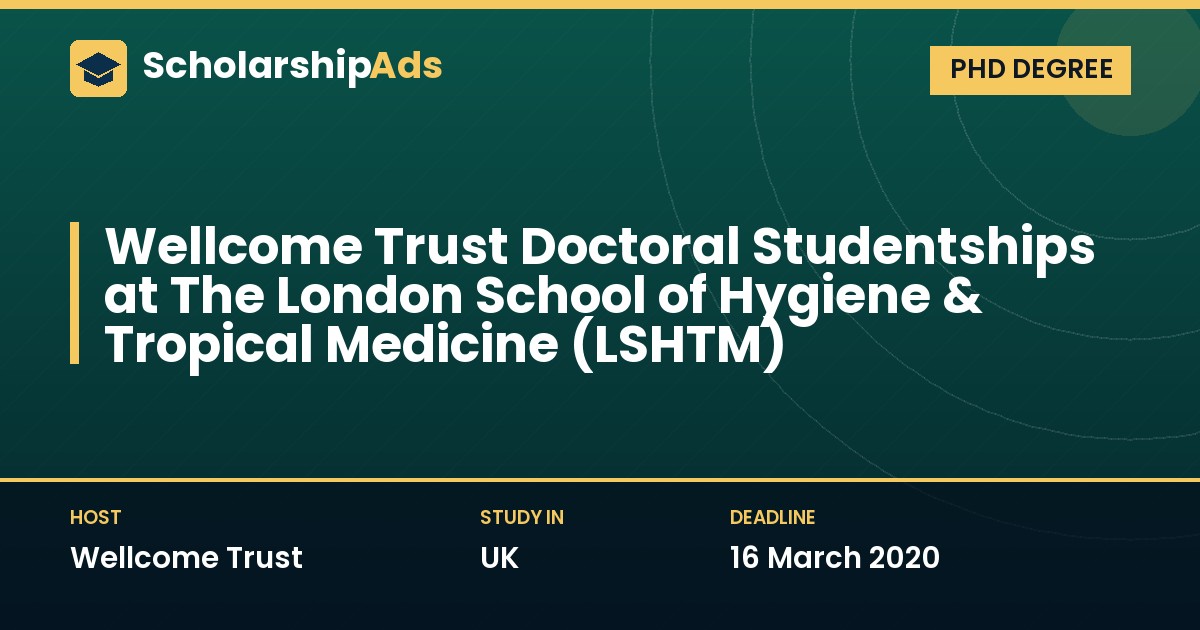
Wellcome Trust Doctoral Studentships at LSHTM, UK (PhD)
Wellcome Trust
Nursing scholarships for international students: who qualifies
Eligibility is set by each host, not by us, so treat this as a checklist to test against the official page rather than a rule.
- Nationality and residence. Many awards target developing countries or specific regions. The Commonwealth schemes, VLIR-UOS, Australia Awards and DAAD all name eligible countries.
- Level. Bachelors awards exist (Karsh, UCL Global Undergraduate, Wells Mountain), but most health-related funding sits at Masters and PhD level.
- Admission or an application in progress. University scholarships usually require you to have applied to or been admitted to the programme.
- Previous funding. Several schemes exclude students who already hold another award for the same study period.
- Language and academic record. English test scores and a minimum grade average appear in most calls.
If you are not sure which level fits you, start with the health scholarships category and read two or three listings end to end before applying to any.
Deadlines through the year: a timeline you can plan around
Health and nursing awards do not share one deadline. They cluster in two busy periods, and a few sit outside them. The table uses the dates in our current listings.
| Period | Examples from the list | What to do then |
|---|---|---|
| November to January | Karsh International Scholarships (1 November early, 2 January regular decision); Hong Kong PhD Fellowship Scheme (1 December); Uppsala University Global Scholarships (15 January); Umeå University Scholarships (15 January) | Submit admission applications and early scholarship forms |
| February to March | VU Amsterdam Fellowship Programme (1 February); Karolinska Institutet (8 to 24 February); VLIR-UOS (January to February); Wells Mountain Foundation (1 March); TaiwanICDF (15 March); Commonwealth Distance Learning (31 March) | Peak season for Masters funding in Europe |
| April to May | University of Twente Scholarships (1 April); Developing Solutions Scholarships (15 April); UCL Global Undergraduate (27 April); Australia Awards (30 April); UCL Global Masters (7 May); Glenmore Medical Postgraduate Scholarship (28 May) | Second wave, mostly UK, Netherlands and Australia |
| September to October | AAUW International Fellowships (17 September); ARES Scholarships (18 September); Commonwealth Master's and PhD Scholarships (20 October); DAAD (August to October each year) | Plan the next intake while results come in |
Some listings are marked annual, which means the date repeats each year. Where a listing gives an exact date, that is the date for the round shown. Always confirm on the official page, because hosts sometimes move a deadline.
How to apply, step by step
- Pick your level and country first. A nursing Masters in Sweden and a nursing Bachelors in the USA need different funding routes. Narrow the list before you write anything.
- Shortlist three to five awards. Choose at least one that covers living costs if you cannot fund them yourself.
- Apply to the university programme. Many scholarships require an admission application or a student number before the funding form opens.
- Read the call in full. Note the required documents, the word limits and the referee rules.
- Draft your motivation letter around the course, not your life story. Explain why this programme, what you will do with the training, and how you meet the eligibility criteria.
- Collect and check documents. Transcripts, certificates, language scores, passport copy, CV and references.
- Submit early and keep the confirmation. Portals slow down near deadlines, and a receipt is your proof if a system fails.
Documents that decide the outcome
Most refusals at the document stage come from small errors, not weak candidates. Prepare these early.
- Academic transcripts and degree certificates, translated if required.
- English language test result, valid on the deadline date.
- Curriculum vitae, one to two pages, with clinical or volunteer experience if you have it.
- Motivation letter or statement of purpose, tailored to each award.
- Two academic or professional references.
- Passport or identity document.
- Admission letter or proof of application, where the host asks for it.
- Research proposal, for PhD and research Masters awards.
Keep one master folder with scanned copies in the format each portal accepts, and name files clearly.
Who these awards suit, and who should look elsewhere
They suit you if you already know which country and level you want, you have a strong academic record, and you can cover living costs or have found an award that includes them. Students targeting Masters study in Sweden, the Netherlands, Belgium, the UK or Australia have the widest choice in this list.
Look elsewhere if you need full funding for a Bachelors in nursing and cannot self-fund living costs, because most entries here are Masters-level and tuition-only. If you have not yet chosen a programme, work on admission first and return to the funding list afterwards.
Related lists worth reading: medicine scholarships, natural sciences scholarships and development studies scholarships.
Common mistakes that cost applicants a round
- Applying to a tuition-only award without a plan for rent and food.
- Missing the university admission deadline and then finding the scholarship form locked.
- Reusing one motivation letter for every award, with the wrong university name left in.
- Ignoring country eligibility on schemes like Commonwealth, VLIR-UOS or Australia Awards.
- Submitting an expired language certificate.
- Waiting for the final day, when portals are slowest.
- Assuming an annual deadline will not change. Check the official page each round.
Alternatives if the nursing list does not fit
If nothing in the health filter matches your level or country, widen the search rather than lowering your standards. Country pages show what is open in each destination: Sweden, the Netherlands, the UK, Australia, the USA, Germany, Belgium, Canada and New Zealand.
University-wide awards also accept nursing students. Examples in our list include Karsh International Scholarships at Duke University, UCL Global Undergraduate Scholarships and University of Manitoba Graduate Fellowships. For research routes, see Hong Kong PhD Fellowship Scheme and AAUW International Fellowships in USA for Women. Our scholarship tips and guides cover writing and shortlisting in more detail.