
What counts as a PhD scholarship?
A PhD scholarship is funding tied to a doctoral research degree. It normally pays your tuition fees and a stipend for living costs, and often adds a research or consumables budget. Some awards are given by universities, some by governments, and some by foundations that support a specific field or group of students.
The listings on this site mix full doctoral scholarships with smaller grants, sandwich programmes and fellowships. Read the cover line on each listing before you shortlist, because a tuition discount and a full stipend are very different offers.
Full funding versus partial funding
Fully funded PhD programmes usually cover fees plus a living stipend for a set number of years. Partial awards may cover fees only, a stipend only, or a one-off sum. The President’s PhD Scholarships at Imperial College London is an example of a full package: tuition, a stipend and a consumables fund for up to 3.5 years.
How to read this PhD scholarship list
Each listing shows the host, the level, the country of study, the deadline and what the award covers. Start with the deadline, then check the cover line, then check who is eligible. If a listing says the round has passed, treat it as background only and look for the current call on the official page.
- Deadline first. A perfect award is useless if the round closed.
- Cover second. Check whether fees, stipend and research costs are all included.
- Eligibility third. Nationality, age, field and host institution rules decide most applications.
- Route last. Some awards need a direct application, others need a university nomination.
To see only doctoral openings, open the filtered list for this page.
Open scholarships that match
 Fully funded
 Singapore
Commonwealth Scholarship at the National University of Singapore (NUS)
National University of Singapore
 New Zealand
Owen Browning Scholarships in Forestry at University of Canterbury
University of Canterbury
 Fully funded
 United Kingdom
President's PhD Scholarships at Imperial College London (Fully Funded)
Imperial College London
Schlumberger Foundation Faculty for the Future Fellowships for Women
Schlumberger Foundation
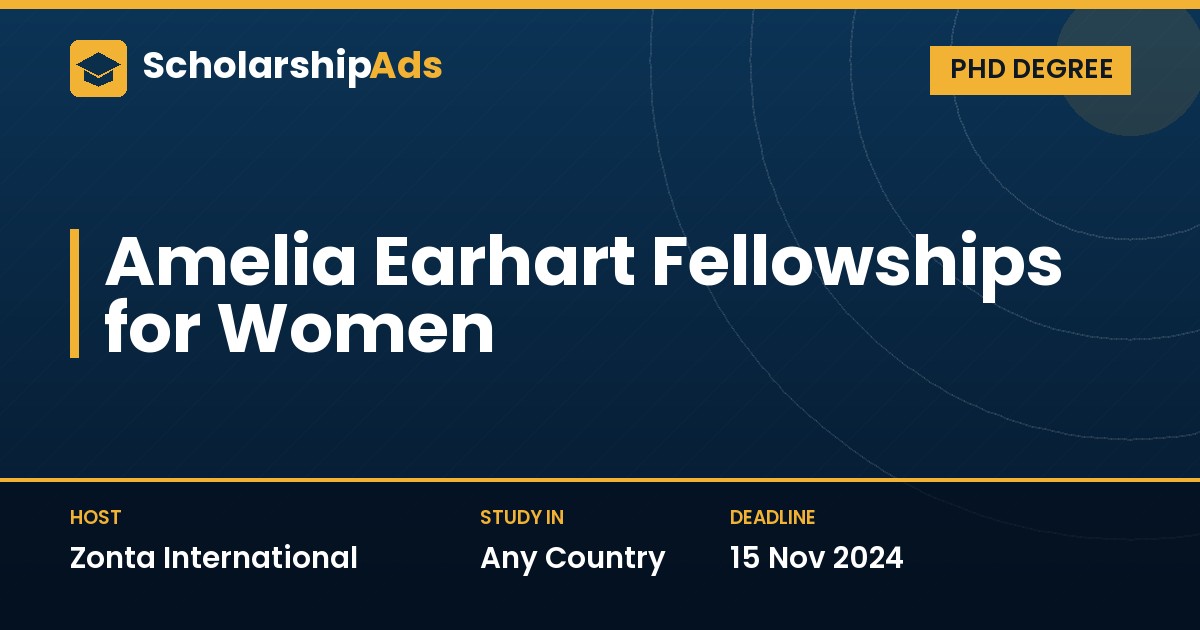
Amelia Earhart Fellowship for Women in Aerospace and Space Sciences (Zonta International)
Zonta International
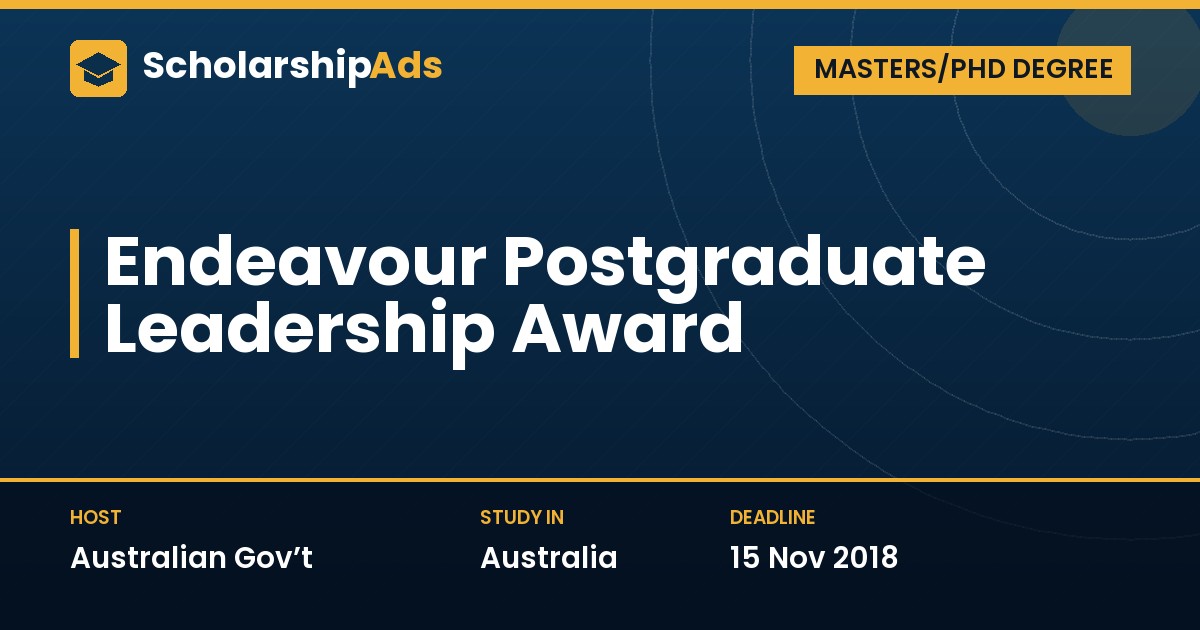
 Australia
Endeavour Postgraduate Leadership Award (Australian Government) for Masters/PhD
Australian Gov’t
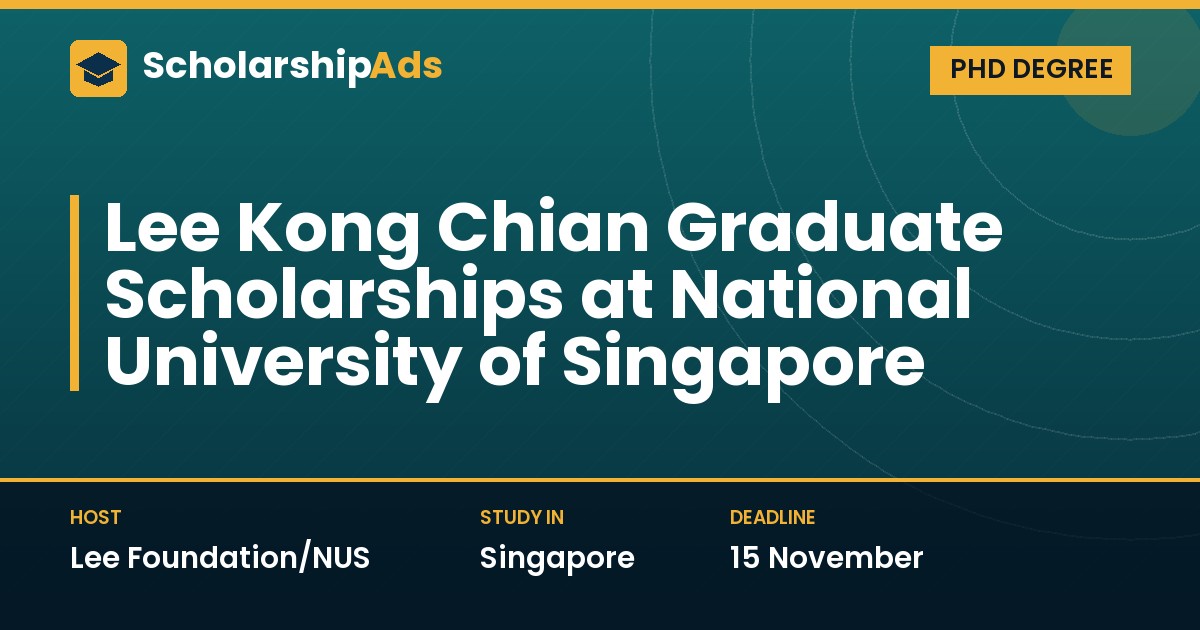 Fully funded
Singapore
Lee Kong Chian Graduate Scholarships at National University of Singapore
Lee Foundation/NUS
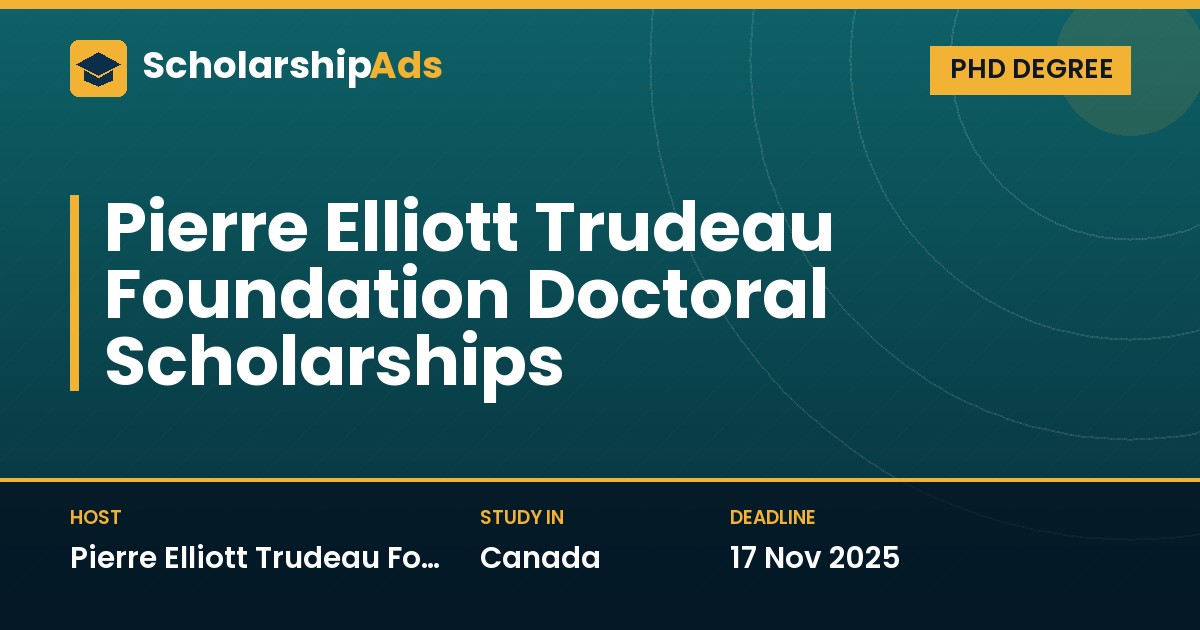 Fully funded
 Canada
Pierre Elliott Trudeau Foundation Doctoral Scholarships for PhD Research in Canada
Pierre Elliott Trudeau Foundation
 Germany
Friedrich Ebert Stiftung Scholarships for Foreign Students in Germany
Friedrich Ebert Stiftung
 Australia
Dean's International Postgraduate Research Scholarship at University of Sydney Faculty of Science
University of Sydney
 Hong Kong
 PhD Fellowship Scheme 2025/26 for International Students
Hong Kong RGC
 United States
East-West Center Graduate Degree Fellowships for Asia, Pacific and US Students
East-West Center
Fully funded PhD scholarships open to international students
These awards cover fees and living costs and accept applicants from outside the host country.
| Programme | Where you study | What it covers | Deadline |
|---|---|---|---|
| President’s PhD Scholarships at Imperial College London | UK | Full tuition, stipend of £27,036 (2027-28 rate) per annum, £2,000 consumables fund | 2 November 2026, 11 January 2027, 1 March 2027 |
| Warwick Chancellor’s International Scholarships | UK | Full academic fees plus a maintenance stipend | 10 December 2026 |
| Flinders International Postgraduate Research Scholarship (FIPRS) | Australia | Tuition, stipend of $36,061 per annum (2026 rate), establishment allowance up to $1,485 | 18 June 2026 |
| Knight-Hennessy Scholars at Stanford University | USA | Tuition and fees, living and academic stipend, travel stipend, up to three years | 6 October 2026 |
| Taiwan International Higher Education Scholarship Program | Taiwan | Airfare, housing, tuition, insurance, textbooks, NT$20,000/month for PhD | 15 March 2027 |
The ANU Fenner School of Environment & Society PhD Scholarship is another full option in Australia, with a stipend of AUD 39,069 per annum and no separate application.
PhD funding for developing country candidates
Several awards target researchers from the Global South or from low- and middle-income countries. These often use a sandwich model, where part of the research happens at home and part at the host university.
- Ghent University Doctoral Scholarships for Candidates from Developing Countries: 24 months funded in Ghent plus 24 months co-funded in the South, deadline 9 February 2027.
- Global Minds Doctoral Scholarships Programme at KU Leuven: tuition, monthly allowance, insurance, travel and research allowance, deadline 4 February 2027.
- The Canadian International Development Scholarships 2030: study and training places in Canada for students from partner countries, applied through project partners.
- MasterCard Foundation Scholarship Program for Africans: tuition, accommodation, books and mentoring, with deadlines set by each partner.
The Wellcome International Training Fellowships and the UBC Graduate Global Leadership Fellowships for Developing Country Students appear in the archive as background; check the official pages for current status.
University and government PhD awards by country
Many doctoral scholarships come from the university you want to join. Others come from a national government or a public funder. Both routes are worth checking in parallel.
Canada and the United States
The Ontario Graduate Scholarship pays $5,000 per session at the University of Toronto, with the graduate unit setting the deadline. The University of Manitoba Graduate Fellowships pay $25,000 per year for doctoral students. The Vanier Canada Graduate Scholarships (Vanier CGS) pay $50,000 per year for three years and require a nomination by a Canadian institution.
Europe
In Germany, the Rosa Luxemburg Stiftung Scholarships for International Students and the Friedrich Naumann Foundation Scholarship for International Students both fund doctoral study, with the Naumann deadlines on 30 April and 31 October each year. The Belgian American Educational Foundation Fellowships pay $32,000 for Master’s or PhD study in Belgium, with a deadline of October 31, 2026. The Slovak Government Scholarships for Selected Developing Countries include doctoral study, deadline 25 May 2026.
Asia, Africa and Oceania
The The National Graduate Institute for Policy Studies (GRIPS) Scholarships in Japan cover tuition, fees and a stipend. The Mandela Rhodes Foundation Scholarships for Africans fund Honours and Master’s study in South Africa, so check the level before applying. The University of Waikato International Excellence Scholarship gives $2,500 to $15,000 off tuition in New Zealand.
Field-specific and targeted PhD scholarships
Some funds exist for one subject or one group of applicants. These tend to have smaller pools and a narrower fit.
- Colt Foundation PhD Fellowships in Occupational/Environmental Health: up to 4 fellowships a year at a UK university, with a stipend, research expenses and fees.
- 2026 Numerix Women in Finance Scholarship: US$20,000 for one woman in a Master’s or PhD in finance, deadline 6 May 2026.
- PEO International Peace Scholarships for Women: up to $12,500 for graduate study in the U.S. or Canada, deadline December 15.
- International PhD Fellowships at Max Planck Research School for Ultrafast Imaging & Structural Dynamics: archive listing for a physics research school in Hamburg.
If your subject is fixed, browse the field lists such as Health Scholarships, Environmental Management Scholarships or Economics & Finance Scholarships.
Who a PhD scholarship suits, and who should look elsewhere
It suits you if you already have a research topic and a potential supervisor, you can commit to a multi-year programme, and you can meet a funder’s deadline months before the course starts. Doctoral awards reward early preparation, not last-minute applications.
Look elsewhere if you are still choosing between taught Master’s and research, or you need funding that starts within weeks. Taught postgraduate funding and short courses sit on different lists. Students who need a nomination, such as the Vanier CGS, should speak to the university before they write anything.
How to apply for PhD scholarships step by step
- Shortlist three to five awards whose deadline, country and field match your plan.
- Check the eligibility rules on the official page, including nationality, age and host institution.
- Find a supervisor or research group and confirm they will support your application.
- Prepare your research proposal, academic transcripts and references.
- Write a motivation letter that names the funder and explains why this programme fits your topic.
- Submit before the deadline and keep the confirmation email.
- Track each application in a simple table so you do not miss an interview or document request.
Where a university nominates candidates, the internal deadline is usually earlier than the public one. Ask the graduate school for its date.
Documents and timeline you should prepare
| Item | What to prepare | When |
|---|---|---|
| Research proposal | Topic, method, supervisor fit | Three to six months before the deadline |
| Transcripts and degree certificates | Certified copies if required | Two to three months before |
| References | Two academic referees who know your research | Ask at least one month ahead |
| Motivation letter | Specific to each funder | Four to six weeks before |
| Language test | Only if the listing or university asks | Check the official page |
| Supervisor confirmation | Email or form from the department | Before you submit |
How PhD scholarships are selected
Panels usually weigh academic record, the quality and feasibility of the research proposal, and the fit with the department or funder’s priorities. Some awards add an interview or a nomination stage. For foundation awards, social or political engagement can count, as with the Rosa Luxemburg Stiftung and Friedrich Naumann listings.
Read the selection criteria in the listing and mirror them in your documents. If a funder names leadership, research impact or a specific region, say plainly how your project meets that point.
Common mistakes in PhD scholarship applications
- Applying to a closed round because the listing was read too quickly.
- Reusing one motivation letter for every funder.
- Ignoring the nomination route and missing the internal deadline.
- Proposing a topic with no supervisor support.
- Assuming a tuition discount is full funding.
- Leaving references until the final week.
Fix the first three and you avoid most wasted applications. The rest is preparation discipline.
Alternatives if a PhD scholarship does not fit
If doctoral funding is not the right route yet, look at Master’s awards that can lead into a PhD, such as the Mandela Rhodes Foundation Scholarships for Africans or the EPFLglobaLeaders Fellowship Programme in Switzerland. Research fellowships and postdoctoral awards cover later stages.
You can also browse by country: Scholarships in United Kingdom, Scholarships in Canada, Scholarships in Australia and Scholarships in Germany. The scholarship finder and the guides section help you narrow the list further.