
How to read this list of scholarships for Indian students
The awards below are open to international students, which includes Indian nationals, unless a listing says otherwise. Read each entry in three passes. First check the degree level and the country. Then read what the award actually pays, because "scholarship" covers everything from a full package to a partial fee cut. Last, check the deadline and whether you must already hold an admission offer before you can apply.
Two labels matter most. A full scholarship pays tuition and living costs, sometimes with insurance and travel. A tuition fee waiver removes the fee but leaves you to fund rent, food and flights. Both are worth having. Only one removes the need for savings or a loan.
Use the filtered list for this page to see what is open now, and the scholarship finder to widen the search by country or field.
Full packages: tuition, stipend, insurance and travel
These awards come closest to the phrase fully funded. They pay the tuition fee and add money for living costs.
- Swedish Institute Scholarships for Global Professionals cover full tuition, a monthly living allowance, insurance and a one-time travel grant for master's study in Sweden.
- ETH Zurich Excellence Masters Scholarships combine a per-semester grant for living and study expenses with a tuition fee waiver in Switzerland.
- Flinders International Postgraduate Research Scholarship (FIPRS) pays international tuition fees, an annual living allowance and an establishment allowance for relocation in Australia.
- Warwick Chancellor’s International Scholarships cover full academic fees and a maintenance stipend for PhD research in the United Kingdom.
- ADB-Japan Scholarship Program for Developing Countries in Asia and Pacific covers tuition, a monthly subsistence and housing allowance, books, medical insurance and travel at participating institutions in Asia and the Pacific.
- Université Paris-Saclay International Master’s Scholarships pay a yearly amount in monthly instalments plus a travel allowance in France.
- Government of Flanders Master Mind Scholarships for International Students give a yearly grant plus a tuition fee waiver in Belgium.
Check whether the stipend is paid for the full programme or only the first year. Several awards renew on satisfactory results.
Open scholarships that match
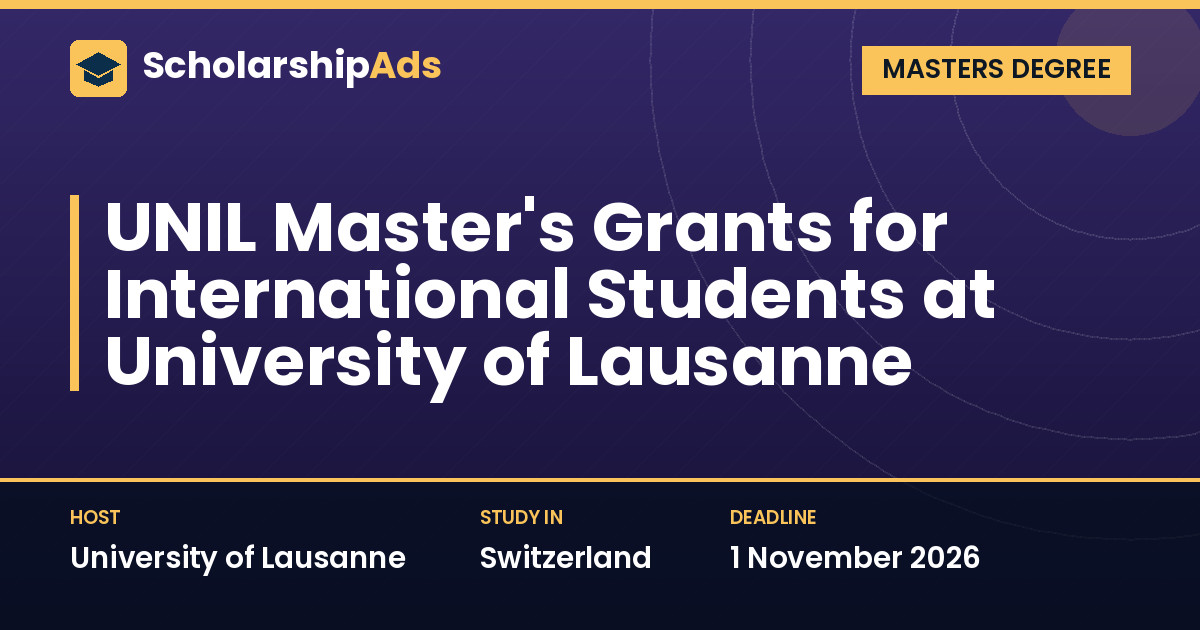
 Switzerland
UNIL Master's Grants for International Students at University of Lausanne
University of Lausanne
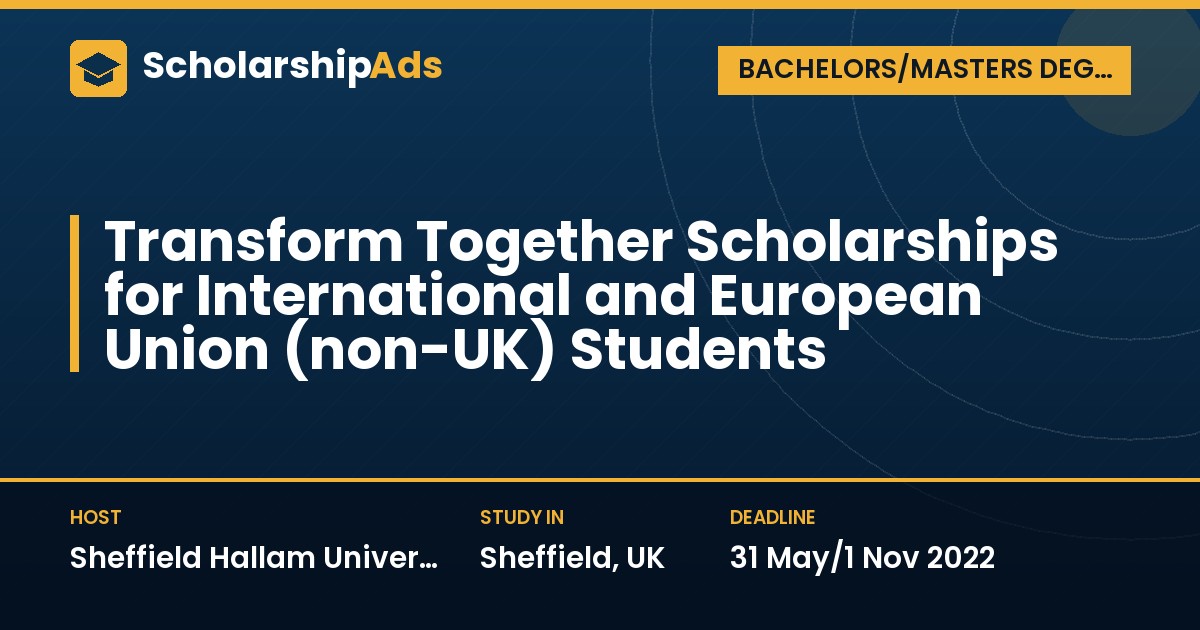
 United Kingdom
Transform Together Scholarships for International and EU (non-UK) Students at Sheffield Hallam University
Sheffield Hallam University
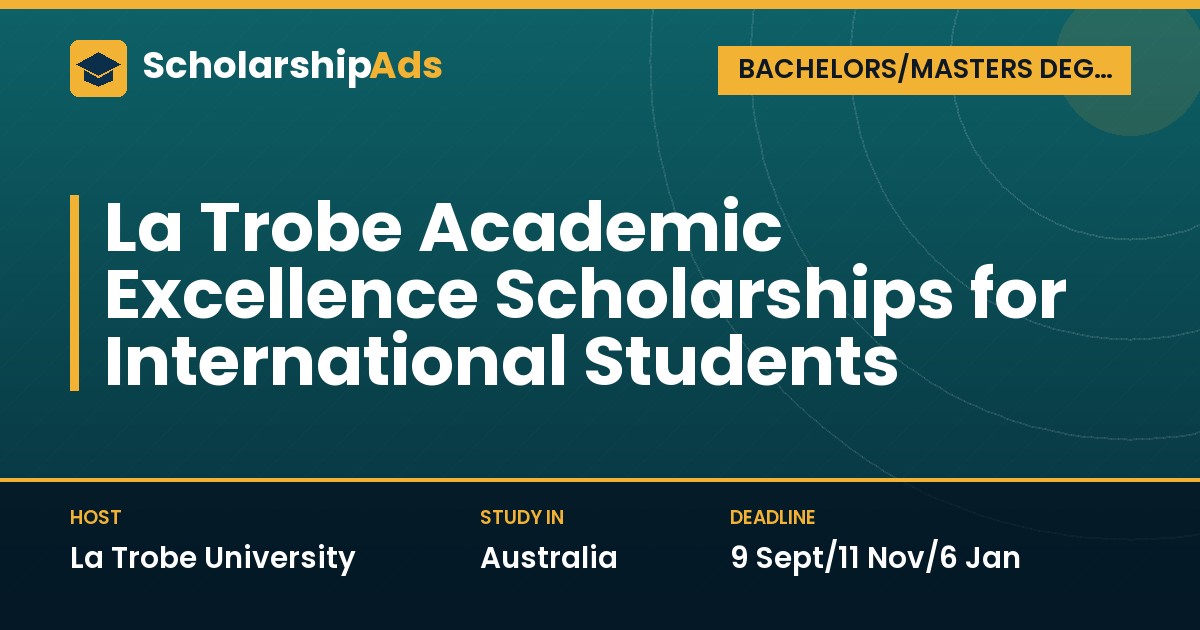
 Australia
La Trobe Academic Excellence Scholarships for International Students
La Trobe University
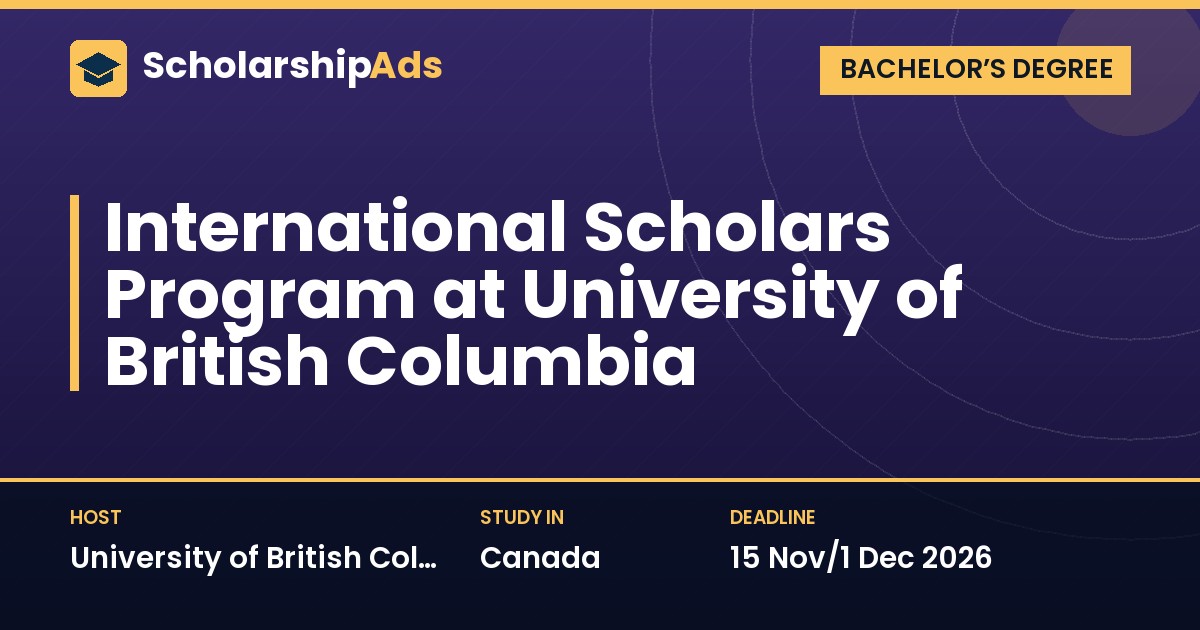
 Canada
UBC International Scholars Program for International Students
University of British Columbia
 Australia
Endeavour Postgraduate Leadership Award (Australian Government) for Masters/PhD
Australian Gov’t

 France
Fondation Rainbow Bridge MBA Scholarship at HEC Paris for African and Asian Women
Fondation Rainbow Bridge/HEC
 France
Emile Boutmy Scholarships at Sciences Po for Non-EU Students
Sciences Po
 Switzerland
ETH Zurich Excellence Masters Scholarships (ESOP)
ETH Zurich
 Australia
Dean's International Postgraduate Research Scholarship at University of Sydney Faculty of Science
University of Sydney
 Fully funded
 The Netherlands
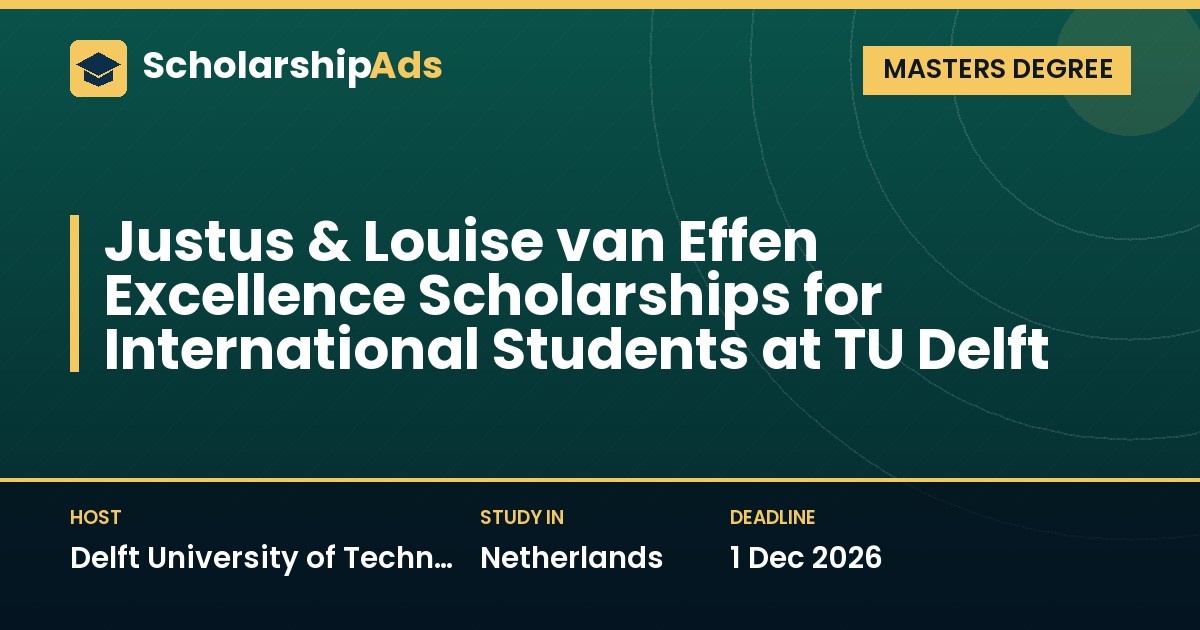
Justus & Louise van Effen Excellence Scholarships at TU Delft for International Master's Students
Delft University of Technology
 The Netherlands
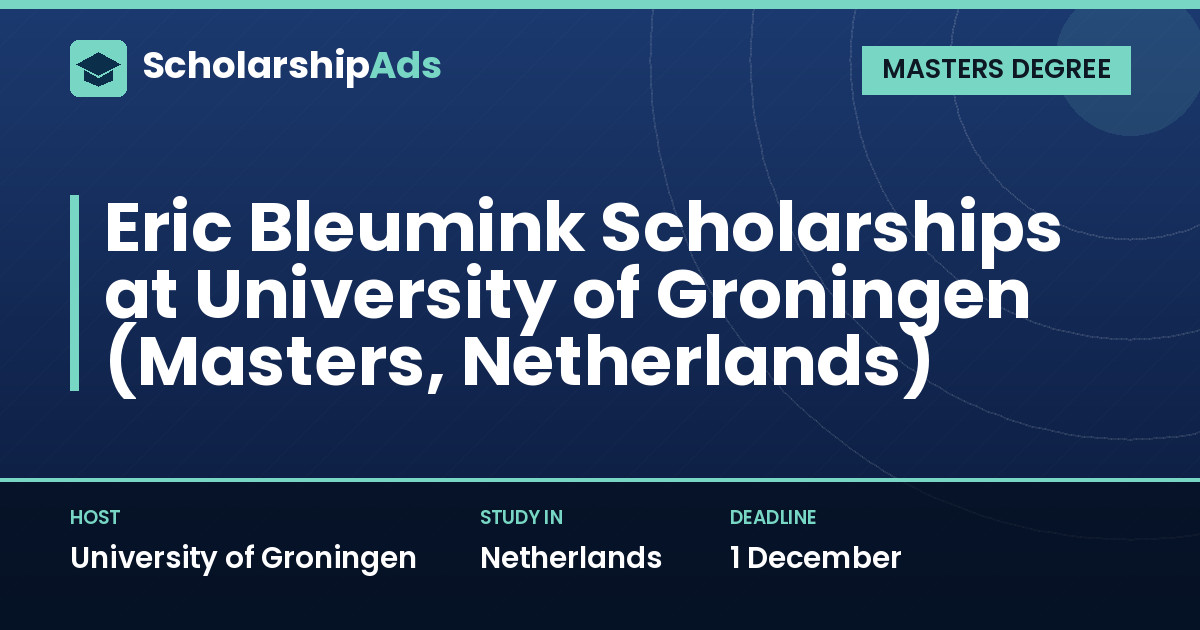
Eric Bleumink Scholarships at University of Groningen (Masters, Netherlands)
University of Groningen
 Fully funded
The Netherlands
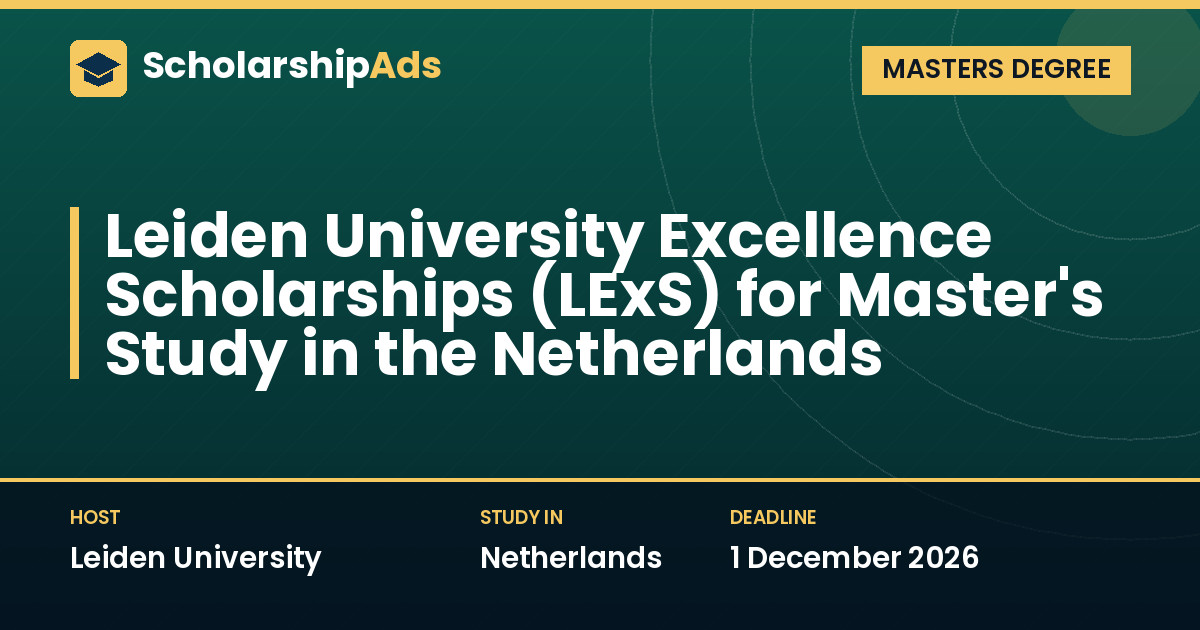
Leiden University Excellence Scholarships (LExS) for Master's Study in the Netherlands
Leiden University
Tuition fee waivers: full fees covered, living costs on you
These awards remove the tuition fee, sometimes in full and sometimes in part. You still need money for rent, food and travel, so plan that budget before you accept.
- Uppsala University Global Scholarships cover the full tuition fee for an international master's programme in Sweden.
- KTH Scholarships pay the tuition fee for the first and second year of a master's at KTH, subject to satisfactory results.
- The University of Gothenburg Axel Adler Scholarships waive the tuition fee of the programme you are admitted to in Sweden.
- VU Amsterdam Fellowship Programme for International Students covers tuition fees for a one or two year master's in the Netherlands.
- Lund University Global Scholarship Programme covers part of the tuition fee or up to the full fee for bachelor's and master's study in Sweden.
- Chalmers IPOET Scholarships for International Students reduce tuition fees by a set percentage, with a possible increase in the second year.
- Bocconi Graduate Graduate Award gives a full tuition and fees waiver for a master's in Milan, renewed if requirements are met.
- Adelaide Global Academic Excellence Scholarships for International Students offer a tuition fee reduction for undergraduate or postgraduate coursework degrees in Australia.
Partial awards and government schemes worth a look
Partial awards cut the bill rather than clear it. They are still useful, especially when combined with savings or a loan.
- Leiden University Excellence Scholarships (LexS) pay a fixed portion of the tuition fee at several set levels for master's study in the Netherlands.
- Radboud Scholarship Programme for International Students reduces the tuition fee to a fixed lower rate and covers visa, permit and insurance costs.
- University of Geneva Excellence Masters Fellowships pay a yearly amount for Master of Science study in Switzerland, extended on academic success.
- UNIL Master’s Grants in Switzerland for Foreign Students pay a monthly stipend and exempt registration fees.
- Ampère Excellence Scholarships for International Students pay a monthly amount for one academic year at ENS de Lyon in France.
- Danish State Tuition Fee Waivers and Scholarships at Roskilde University cover tuition and add a monthly scholarship for living expenses.
- Danish Government Scholarships for Non-EU Students can be a full or partial fee waiver and/or a grant towards living costs, administered by each institution.
- Slovak Government Scholarships for Selected Developing Countries include a monthly grant, accommodation and study at a public university.
- JFUNU Scholarships for MSc in Sustainability Programme for Developing Country Students pay a monthly allowance with tuition possibly waived, though travel and insurance are yours.
- University of Manitoba Graduate Fellowships pay yearly amounts for master's and doctoral study in Canada.
Undergraduate and research awards: what to know
Most awards in our listings are for master's study. Two other levels appear often enough to plan around.
After 12th: bachelor's awards
Undergraduate funding is thinner. The International Scholars Program at University of British Columbia offers need-and-merit awards for international undergraduates in Canada, with the value set by assessed financial need. The ICSP Scholarships at University of Oregon USA give a partial tuition waiver to international students with financial need and merit. Both require a separate application alongside your admission file.
After graduation: PhD and research funding
Doctoral funding usually comes as fees plus a stipend. Warwick Chancellor’s International Scholarships and Flinders International Postgraduate Research Scholarship (FIPRS) are the clearest examples here. Vanier Canada Graduate Scholarships (Vanier CGS) pays a yearly amount for three years but requires nomination by a Canadian institution, and the round in our listing has closed, so check the official page for the current cycle. TUBITAK Graduate Scholarships for International Students covers master's and PhD study in Turkey; the listing in our database is from a past round, so confirm current terms on the official site.
Who qualifies for these scholarships as an Indian applicant
Eligibility differs by award, but the same checks come up again and again.
- Nationality: most awards are open to international students generally. Some, like the Swedish Institute and ADB-Japan schemes, name developing countries, and India's position must be checked on the official page.
- Degree level: match the award to bachelor's, master's or PhD. Applying at the wrong level is an automatic rejection.
- Admission: many awards require you to hold or be applying for a place at the named university.
- Academic record: strong grades and, for research degrees, a convincing project outline.
- Language: an English test score where the programme is taught in English, and the local language for some government schemes.
- Financial need: need-based awards ask for family income and asset documents.
- Other funding: several awards cannot be combined with another scholarship.
Read the eligibility section before you write anything. A single unmet condition wastes weeks.
Deadlines and timeline: plan a year ahead
Deadlines cluster in two waves. The early wave runs from late November to February for a September start. The later wave runs from March to June. Sweden is the tightest: several Swedish awards close in mid-January, and you must have paid your application fee to the national admissions system by then.
| Award | Level | Deadline in our listing |
|---|---|---|
| ETH Zurich Excellence Masters Scholarships | Master's | 30 November 2026 |
| Leiden University Excellence Scholarships (LexS) | Master's | 1 December 2026 |
| Warwick Chancellor’s International Scholarships | PhD | 10 December 2026 |
| The University of Gothenburg Axel Adler Scholarships | Master's | 15 January 2027 |
| KTH Scholarships | Master's | 15 January 2027 |
| Uppsala University Global Scholarships | Master's | 15 January 2027 |
| VU Amsterdam Fellowship Programme for International Students | Master's | 1 February 2027 |
| Government of Flanders Master Mind Scholarships for International Students | Master's | 1 February to 1 April 2026 |
| University of Geneva Excellence Masters Fellowships | Master's | 28 February 2026 |
| Université Paris-Saclay International Master’s Scholarships | Master's | 31 March 2026 |
Work backwards. Twelve months before the deadline, shortlist awards. Nine months before, book your language test. Six months before, request transcripts and references. Two months before, draft and revise your motivation letter. Read more planning advice in our scholarship tips.
How to apply step by step
- Shortlist three to six awards that match your level, country and field. Use the filtered list for this page.
- Check eligibility line by line on the official page. Note nationality rules, age limits and whether you need an admission offer first.
- Secure admission or a place in the queue. Many awards only consider applicants who already applied to the university.
- Take the language test early. Scores expire, and a late result can miss the deadline.
- Collect documents from your college and bank well before the closing date.
- Write the motivation letter for each award. Name the programme, the supervisor or department, and why this funding fits your plan.
- Submit before the deadline and keep the confirmation email. Portals slow down in the final hours.
Documents you will need
- Passport valid for the study period
- Academic transcripts and degree certificates
- English or local language test score
- Two or three academic references
- Motivation letter or statement of purpose
- Curriculum vitae
- Research proposal, for PhD and research master's awards
- Financial need documents, for need-based awards
- Portfolio or writing sample, where the field requires it
Ask for references a month ahead and give your referees your CV and the award name. Scan every document in the format the portal asks for, and keep file sizes under the limit.
How selection works and who these awards suit
Selection is usually a two-step process. The university or government checks eligibility and academic merit first, then a panel ranks the shortlist on fit between your goals and the programme. Need-based awards add a financial assessment.
Who it suits
- Students with strong grades and a clear reason for choosing that country and programme.
- Master's applicants, since most awards in our listings are at that level.
- PhD candidates with a defined research question and a potential supervisor.
- Students who can start preparing a year ahead.
Who should look elsewhere
- Anyone who needs funding confirmed within weeks. These cycles take months.
- Applicants who want a full package but only qualify for a fee waiver. Budget for living costs or look at awards that include a stipend.
- Students who cannot meet a language test requirement.
Common mistakes and where to look next
Most rejections come from avoidable errors.
- Reusing one motivation letter for every award. Panels spot it immediately.
- Missing the separate scholarship form. Admission and funding are often two applications.
- Ignoring the funding gap. A fee waiver still leaves rent, food and flights to pay.
- Applying at the wrong degree level or to a programme the award does not cover.
- Late documents. A missing transcript at the deadline ends the application.
- Assuming one award can be stacked with another. Many cannot.
If your field is narrow, browse by subject: engineering, medicine, economics and finance, environment or any field of study. For country pages, start with Sweden, Switzerland, the Netherlands, Canada and the United States. Our guides cover applications in more depth.